
- A foreign individual cannot own a yacht in the Turkish ship registry (TCC art. 940); a foreign resident can enter a private yacht in the port registry and fly the Turkish flag (Port Registry Regulation, art. 9).
- On a foreign flag she cruises on a transit log and may stay in a marina for five years, extendable once (Marine Tourism Regulation, arts 42, 46).
- Five checks before paying: owner, registered charges, what is owed, arrest or dispute, survey.
- A port-registry yacht changes hands only before the harbour master or a notary; anything else is void (Port Registry Regulation, art. 14).
A foreign buyer of a yacht in Türkiye has three decisions to make before the sale itself: which flag the yacht will fly, where she will be registered, and how long she will stay. The purchase then turns on checks that are the same whatever the answer — who owns her, what is registered against her, and what is owed on her.
Which flag
Under the Turkish Commercial Code a vessel is Turkish only if owned by a Turkish citizen, or by a Turkish company whose managers and voting majority are Turkish (TCC art. 940). A foreign individual cannot register a yacht in the Turkish ship registry in his or her own name. There are two ways round this.
- The port registry. A foreign national who holds a Turkish residence permit may register a private-use yacht in the port registry — the bağlama kütüğü kept by the harbour masters — irrespective of the Code's flag rules; the yacht then flies the Turkish flag, and the residence permit is among the documents lodged (Port Registry Regulation, arts 9, 12, 16).
- A foreign flag. The yacht stays on a foreign flag and enters Turkish waters as a foreign private yacht, with everything that follows for cruising and stay.
Cruising and staying on a foreign flag
The customs and tax consequences of keeping the yacht in Türkiye beyond the temporary-admission rules depend on the flag, the owner's residence and the stay; they are checked for each yacht before purchase, not after.
- Entry on a transit logMarine Tourism Regulation, art. 42
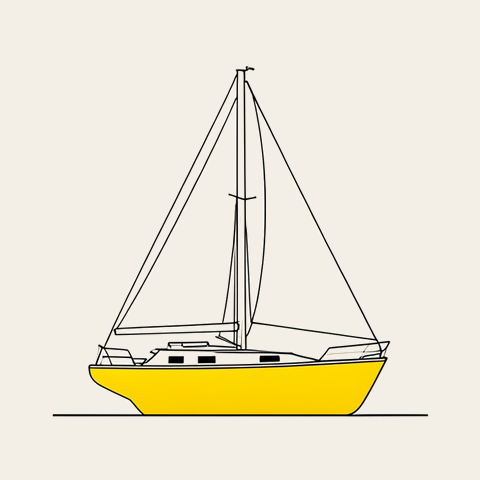 Cruising by the owner and authorised personsart. 47
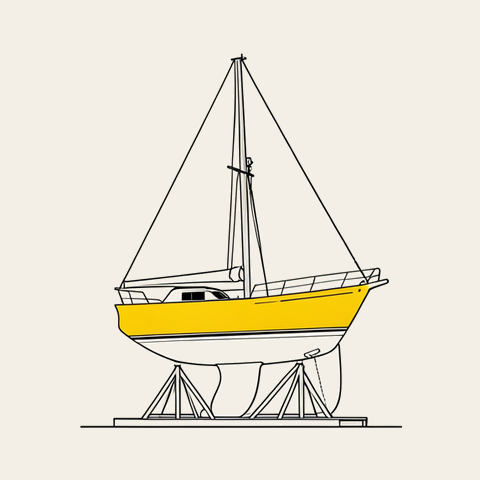 Lay-up in a licensed marina, up to five yearsart. 46
 Ministry extension, a further five yearsart. 46
 No contact for two years after the contract ends: Customs Law liquidationart. 46
Each step is described in the text above; the articles are those of the Marine Tourism Regulation.
The checks before paying
- Who owns her. The registry entry — Turkish ship registry, port registry or the foreign flag's register — and the seller's identity or company documents. A seller who is not the registered owner needs a chain of title.
- What is registered against her. A registered ship mortgage is the only contractual security a registered vessel can carry (TCC art. 1014); it is on the registry and it survives the sale unless discharged.
- What is owed on her. Marina, yard and chandler accounts and crew wages are maritime claims that can arrest the yacht in a Turkish port (TCC arts 1352, 1355), and some of them — crew wages above all — carry a lien that follows the yacht into the buyer's hands for a year (TCC arts 1320, 1326). A letter from the marina and the yard, and the crew's signed wage settlement, belong in the closing file.
- Is she under arrest or in dispute. An arrest is recorded at the registry and notified to the harbour master and customs (TCC art. 1366); a pending action is not, and is asked about in writing.
- Survey and sea trial. On the buyer's terms, before the balance is paid.
The sale
| Where she is registered | How title passes | Rule |
|---|---|---|
| Turkish ship registry | An agreement to transfer ownership and the transfer of possession; the agreement is made in writing with the signatures notarised, or before the registry itself | TCC art. 1001 |
| Port registry | Only before the harbour master's office or a notary; a transfer made any other way is void, and the notary route requires a same-day registry extract of the encumbrances, seen by the buyer | Port Registry Regulation, art. 14 |
| Foreign flag | Under her flag state's rules; the Turkish part is the customs position and the marina's release | — |
Payment is made against the notarised agreement and the registry entry, through an escrow or a lawyer's client account, and not before the encumbrance search.
Updates to this guide
17 September 2026
Written against the text of the Marine Tourism Regulation, the Port Registry Regulation and TCC arts 940–941, 1001, 1014.
3 September 2026
First published.
Questions readers ask
Do I need a Turkish company to own a yacht in Türkiye?
Not for a private yacht. A foreign national with a Turkish residence permit may register a private-use yacht in the port registry and fly the Turkish flag (Port Registry Regulation, arts 9, 12); a foreign-flagged yacht may be kept in a licensed marina for up to five years, extendable (Marine Tourism Regulation, art. 46). A Turkish company is the route for commercial operation under the Turkish flag (TCC art. 940).
What survives the sale?
A registered ship mortgage (TCC art. 1014), and any maritime lien for the year after it arose — crew wages above all (TCC arts 1320, 1326). Marina and yard accounts can arrest the yacht in the buyer's hands only if the person liable still owns her (TCC art. 1369), which is why they are settled before closing.
How is the transfer formalised?
For a Turkish-registered yacht, by a written transfer agreement with notarised signatures, or an agreement made before the registry, followed by transfer of possession (TCC art. 1001). For a port-registry yacht, only before the harbour master's office or a notary, with a same-day registry extract of the encumbrances shown to the buyer (Port Registry Regulation, art. 14). For a foreign-flagged yacht, under the flag state's rules.