Sale and purchase, shipbuilding, recycling
Ship sale and purchase, newbuilding and repair contracts with Turkish yards, and recycling at Aliağa: what Turkish law always governs — registry, flag, mortgage, arrest and the recycling plan. Practice areas are listed; no claim of specialisation is made.
Written forOwners · Buyers and sellers · Yards · Cash buyers and recyclers · Financiers
Articles cited checked against the official text of the legislation · 17 September 2026

What goes wrong, and what Turkish law governs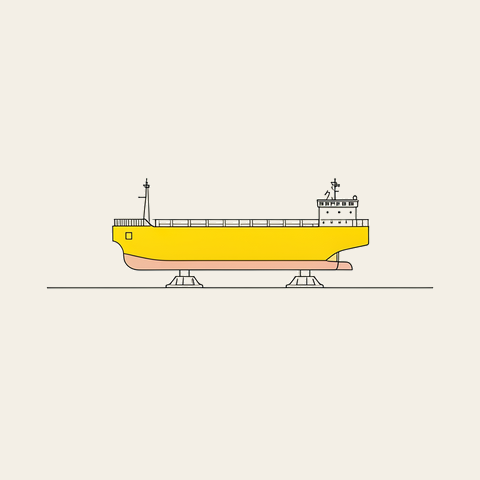
- Three contracts bring a foreign party here: the sale of a second-hand vessel, a newbuilding or repair contract with a yard, and a sale for recycling at Aliağa.
- English law and London arbitration usually govern the merits; Turkish law governs the registry, the flag, the mortgage and what happens at the yard.
- A registered vessel changes hands by a written, notarised agreement plus delivery (TCC art. 1001); the mortgage is the only contractual security she can carry (TCC art. 1014).
- No vessel is recycled without an authorised facility, an approved recycling plan and notice to the harbour master (Ship Recycling Facilities Regulation, arts 5, 18, 21).
Three kinds of contract bring a foreign party to a Turkish yard or a Turkish counterparty: the sale and purchase of a second-hand vessel, a newbuilding or repair contract with a yard in Tuzla, Yalova or the other building centres, and the sale of a vessel for recycling at Aliağa. Most of these contracts choose English law and London arbitration; Turkish law still governs the registry, the mortgage, the flag, the yard's position over the vessel in its hands and the recycling plan and notifications — and a Turkish court is where a vessel here is arrested if the deal goes wrong.
What Turkish law always governs
- whether a vessel may fly the Turkish flag and be registered here (TCC arts 940, 956);
- how ownership of a registered vessel is transferred (TCC art. 1001);
- the mortgage as the only contractual security on a registered vessel (TCC art. 1014);
- the registration of a vessel under construction and the mortgage over her (TCC arts 986, 1058);
- the ship recycling plan and notifications without which no vessel is recycled in Türkiye (Ship Recycling Facilities Regulation, arts 5, 18).
Sale and purchase: transfer, flag, mortgage
- A registered vessel can be pledged by contract only by way of a ship mortgage, which entitles the mortgagee to be paid out of the vessel's price; it may secure a future or conditional debt (TCC art. 1014).
- In a forced sale in Türkiye a registered vessel, Turkish or foreign, is sold under the rules for immovables (TCC art. 1383).
- Disputes over a sale contract and disputes over ownership or possession are maritime claims for which the vessel can be arrested (TCC art. 1352); in an ownership dispute only the vessel in dispute may be arrested (TCC art. 1369).
Read the full section
Transfer of a registered vessel
For a vessel entered in the Turkish ship registry, transfer of ownership requires an agreement between owner and buyer to transfer ownership and the transfer of possession; the agreement must be in writing with the signatures notarised, and may be made before the registry (TCC art. 1001).
- şerhregistry annotation — TCC art. 977
- A claim to have a right over a vessel or a mortgage created, cancelled or altered may be protected by an annotation in the registry; a disposal made after the annotation is ineffective to the extent it prejudices the annotated right. This is the tool by which a buyer who has paid a deposit protects itself between contract and delivery.
Flag and registry
A vessel is Turkish, and entitled to the Turkish flag, only if owned by a Turkish citizen or by a Turkish company whose managers and voting majority are Turkish (TCC art. 940); merchant vessels so entitled are entered in the ship registry (TCC art. 956).
- Sale to a foreign buyer. A vessel that loses the right to the flag is deleted from the registry on application, but only with the consent of the registered mortgagees; absent that consent the loss of the flag is recorded and the deletion waits for the mortgages to be discharged (TCC art. 965).
- Built in Türkiye for a foreign buyer. The Ministry may give a flag certificate valid until she reaches the place of delivery (TCC art. 944).
- Bareboat in. A foreign-owned vessel bareboat-chartered to Turkish interests for at least a year may be permitted to fly the Turkish flag for the period and is entered in a special register (TCC art. 941).
Mortgages and the forced sale
A registered vessel can be pledged by contract only by way of a ship mortgage, which entitles the mortgagee to be paid out of the vessel's price; it may secure a future or conditional debt (TCC art. 1014).
In a forced sale in Türkiye a registered vessel, Turkish or foreign, is sold under the rules for immovables (TCC art. 1383). For a foreign-registered vessel the enforcement office (TCC art. 1384):
- notifies the flag state's consulate;
- obtains the registry extract for the list of encumbrances;
- announces the sale to the registry, the registered mortgagees, the lien creditors who have come forward and the registered owner, and publishes it in the country of registry.
Disputes over a sale contract and disputes over ownership or possession are maritime claims for which the vessel can be arrested (TCC art. 1352); in an ownership dispute only the vessel in dispute may be arrested (TCC art. 1369).
Newbuilding and repair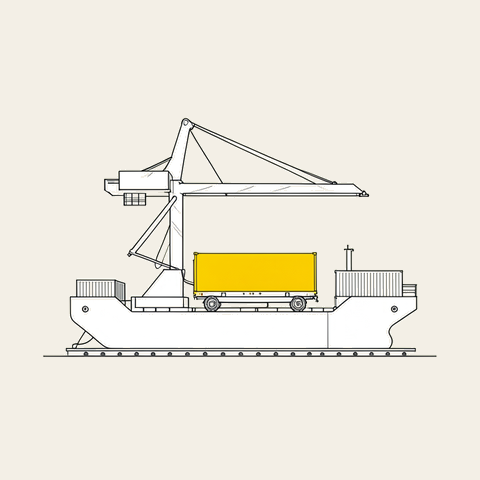
- She is registered by the registry of the place of building, which remains competent even if the hull is moved (TCC art. 986).
Read the full section
The vessel under construction
A vessel under construction is entered in the special register for vessels under construction (TCC art. 986):
- on the owner's application;
- where a mortgage is to be created over her;
- where she is arrested;
- where the yard's own claim to a mortgage is to be annotated.
She is registered by the registry of the place of building, which remains competent even if the hull is moved (TCC art. 986). The mortgage over a vessel under construction follows the ordinary ship-mortgage rules with the special provisions for building (TCC art. 1058).
For a foreign buyer paying instalments, registration of the hull and a mortgage over it are the Turkish-law security that sits alongside the refund guarantee.TCC arts 986, 1058
Yard claims and the buyer's claims
A claim for the building, rebuilding, repair, equipping or alteration of a vessel is a maritime claim (TCC art. 1352): a yard that is not paid can arrest the vessel in its hands, and a buyer with a claim against the yard's own vessels can arrest them.
| Governed by | |
|---|---|
| The merits | The contract — English law and London arbitration are usual; awards are enforceable here under the New York Convention through the courts, as set out on the charter parties page |
| What happens at the yard | Turkish law: the registry, the mortgage, the arrest and the release against security (TCC arts 1370–1372) |
Repair disputes
Repair contracts with Turkish yards raise the same questions in smaller form: the yard's invoice is a maritime claim (TCC art. 1352) for which the vessel can be arrested while she is still at the yard or in the port, and the owner's claim for defective work or delay is pursued under the contract. The practical point is the same as for any arrest — the vessel is released against security (TCC arts 1370–1372) and the account is fought afterwards.
Recycling at Aliağa
Ships are recycled in Türkiye at the facilities at Aliağa, under the Ship Recycling Facilities Regulation of 22 June 2026, which authorises the facilities under the Hong Kong Convention — approved for ratification by Türkiye by Law No. 6931 of 2017 — and replaced the Ship Dismantling Regulation of 2004 (Ship Recycling Facilities Regulation, arts 1, 25).
From plan to completion
- Authorised facility. A facility may recycle a vessel within the Convention only if it holds a recycling authorisation certificate from the Ministry of Transport, valid for up to five years (Ship Recycling Facilities Regulation, art. 9).
- Recycling plan. Before a vessel is recycled the facility prepares a ship-specific recycling plan, in Turkish with a translation into English, French or Spanish, and applies to the Ministry for its approval; the Ministry acknowledges the application to the facility, the owner and the flag administration within three business days, and notifies its approval or refusal to the same three (art. 5).
- Notice to the harbour master. The facility notifies the harbour master in writing of its intention to recycle the vessel and, once the International Ready for Recycling Certificate has been issued, of the planned start date with a copy of the certificate; the vessel is not berthed and recycling is not started without that notification (art. 18).
- Berthing. The harbour master may refuse the berthing where it sees a safety, security or pollution risk, and no other vessel may be berthed on the seaward side of a vessel being recycled (art. 19).
- Completion. Recycling is complete when all waste and materials have been moved to the facility's sealed ground, and the facility sends a statement of completion to the Ministry within fourteen days, which forwards it to the flag administration (art. 20).
No vessel may be recycled outside an authorised facility; recycling in place is allowed only in compulsory cases with the Environment Ministry's approval, and unauthorised recycling in place attracts fines on the person responsible, on each worker and on the shipowner — one million lira for the owner at the 2026 figure, revalued each year; check the figure in force (Ship Recycling Facilities Regulation, arts 21, 22). Vessels flying the flag of a state that is not a party to the Convention are given no more favourable treatment (Ship Recycling Facilities Regulation, art. 21).
The legal work on each side
- Seller: the sale contract with the cash buyer or the recycler, the inventory of hazardous materials and the Ready for Recycling Certificate under the flag, the deletion of the vessel from her registry, the discharge of the mortgage, and the customs entry of the vessel as scrap.
- Recycler: the recycling plan, the notifications and the waste contracts.
Where a recycling sale goes wrong — an unpaid balance, a vessel arrested at Aliağa by a creditor, a dispute over the inventory of hazardous materials — the vessel is in a Turkish port and the maritime claim and arrest rules apply as anywhere else (TCC arts 1352, 1355).
- Authorised facility: certificate valid up to five yearsShip Recycling Facilities Regulation, art. 9
 Ship-specific recycling plan approved by the Ministryart. 5
 Notice to the harbour master with the Ready for Recycling Certificateart. 18
- Recycling inside the authorised facility onlyart. 21
 Statement of completion within fourteen daysart. 20
Unauthorised recycling in place is fined; the shipowner's figure is revalued each year (art. 22).
Documents we need from you
- Memorandum of agreement, building or repair contract, and any refund or performance guarantee
- Registry extract of the vessel or hull and the list of encumbrances
- Class status, certificates and, for a sale, the delivery documents
- Inventory of hazardous materials and the International Ready for Recycling Certificate, for recycling
- Invoices, milestone statements and the correspondence on the sum claimed
- Company documents and signatory details; power of attorney in the form Turkish courts and registries accept
Common questions
Is a dispute with a Turkish yard heard in Türkiye or in arbitration?
As the contract says. Most building and repair contracts choose English law and London arbitration, and the award is enforced in Türkiye under the New York Convention. Whatever the forum, the vessel in the yard's hands, or the yard's own vessels, can be arrested in Türkiye to secure a building or repair claim (TCC art. 1352), and the registry, mortgage and flag questions are governed by Turkish law.
Can a foreign buyer keep the Turkish flag after purchase?
Not by owning the vessel directly: the Turkish flag is reserved to vessels owned by Turkish citizens or Turkish-controlled companies (TCC art. 940). A foreign owner who bareboat-charters the vessel to Turkish interests for at least a year may obtain permission for her to fly the Turkish flag for the period (TCC art. 941). On sale to a foreign buyer the vessel is deleted from the Turkish registry with the mortgagees' consent (TCC art. 965).
How is a hull under construction secured for the buyer?
By registration in the register of vessels under construction and a mortgage over the hull (TCC arts 986, 1058), alongside the yard's refund guarantee. Registration is at the registry of the place of building and follows the hull if it is moved (TCC art. 986).
What does a recycler need before a vessel is cut at Aliağa?
An authorisation certificate for the facility (Ship Recycling Facilities Regulation, art. 9); a recycling plan for that vessel approved by the Ministry of Transport, with notice of the application and of the decision to the owner and the flag administration (Ship Recycling Facilities Regulation, art. 5); and written notice to the harbour master of the intention to recycle and, once the International Ready for Recycling Certificate is issued, of the planned start date — without it the vessel is neither berthed nor cut (Ship Recycling Facilities Regulation, art. 18). The regulation of 22 June 2026 replaced the 2004 Ship Dismantling Regulation (Ship Recycling Facilities Regulation, art. 25).
Ports where we attend
Where the vessel is decides the court, the enforcement office and the timing. Istanbul directly; other ports through correspondent counsel.